IN TIME
Curated by Annie Cattrell
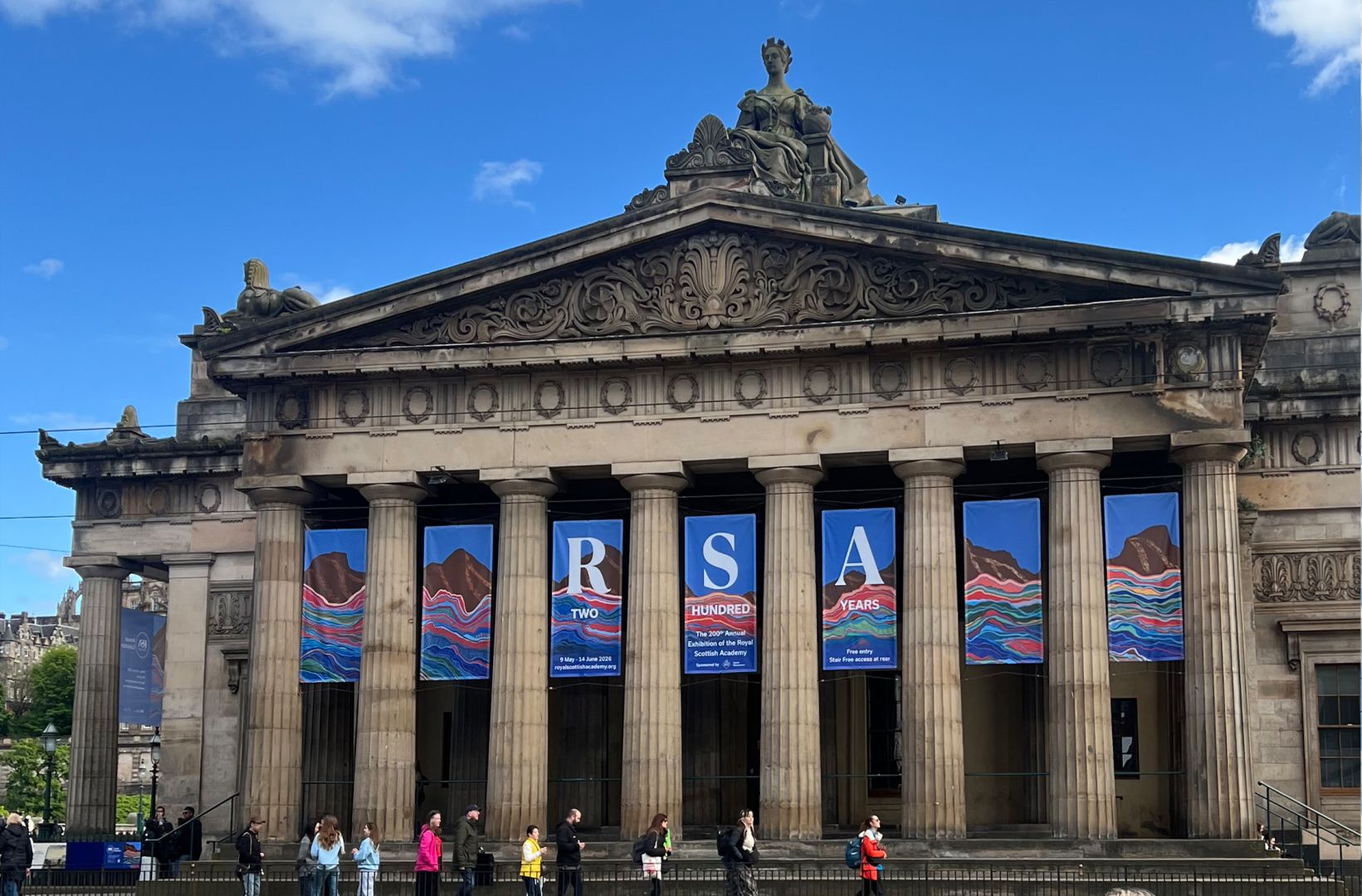
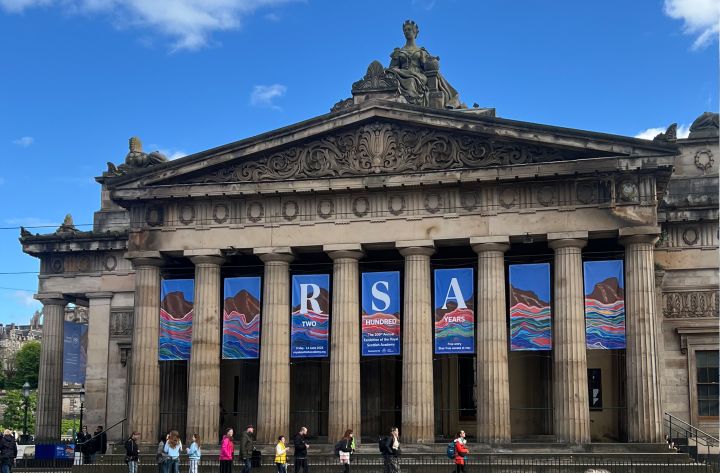
Royal Scottish Academy of Art and Architecture, Edinburgh, 2026
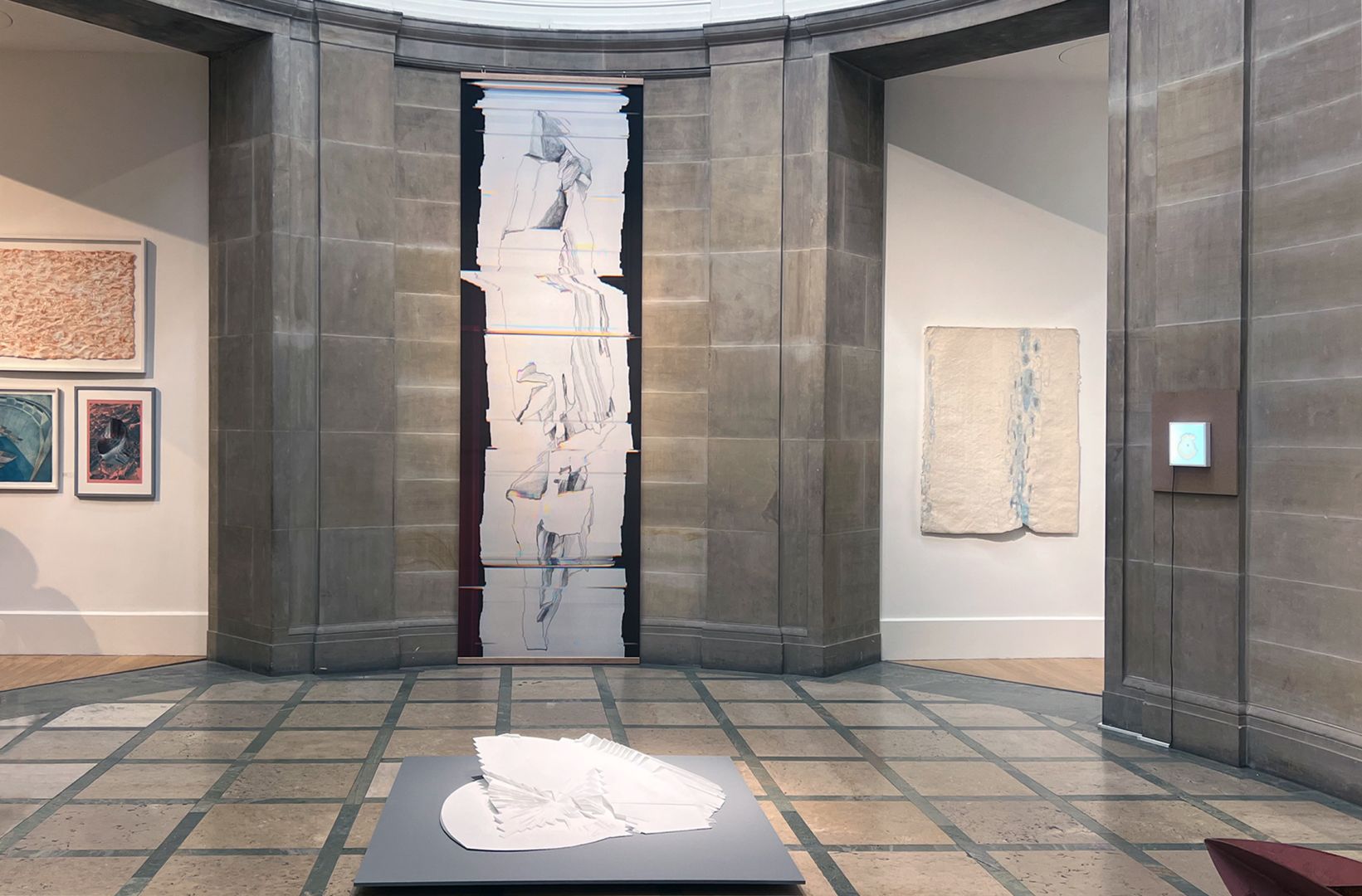
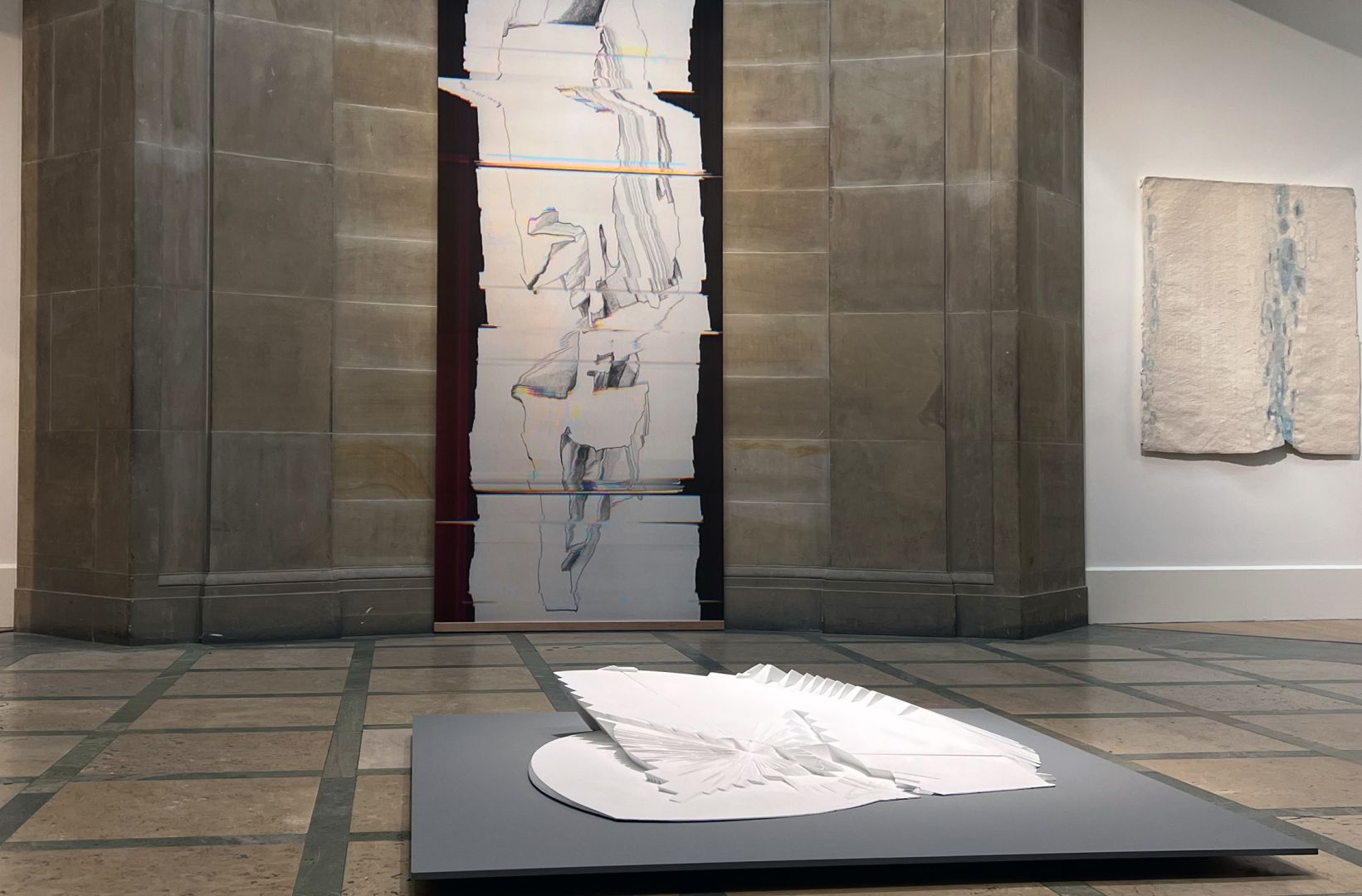
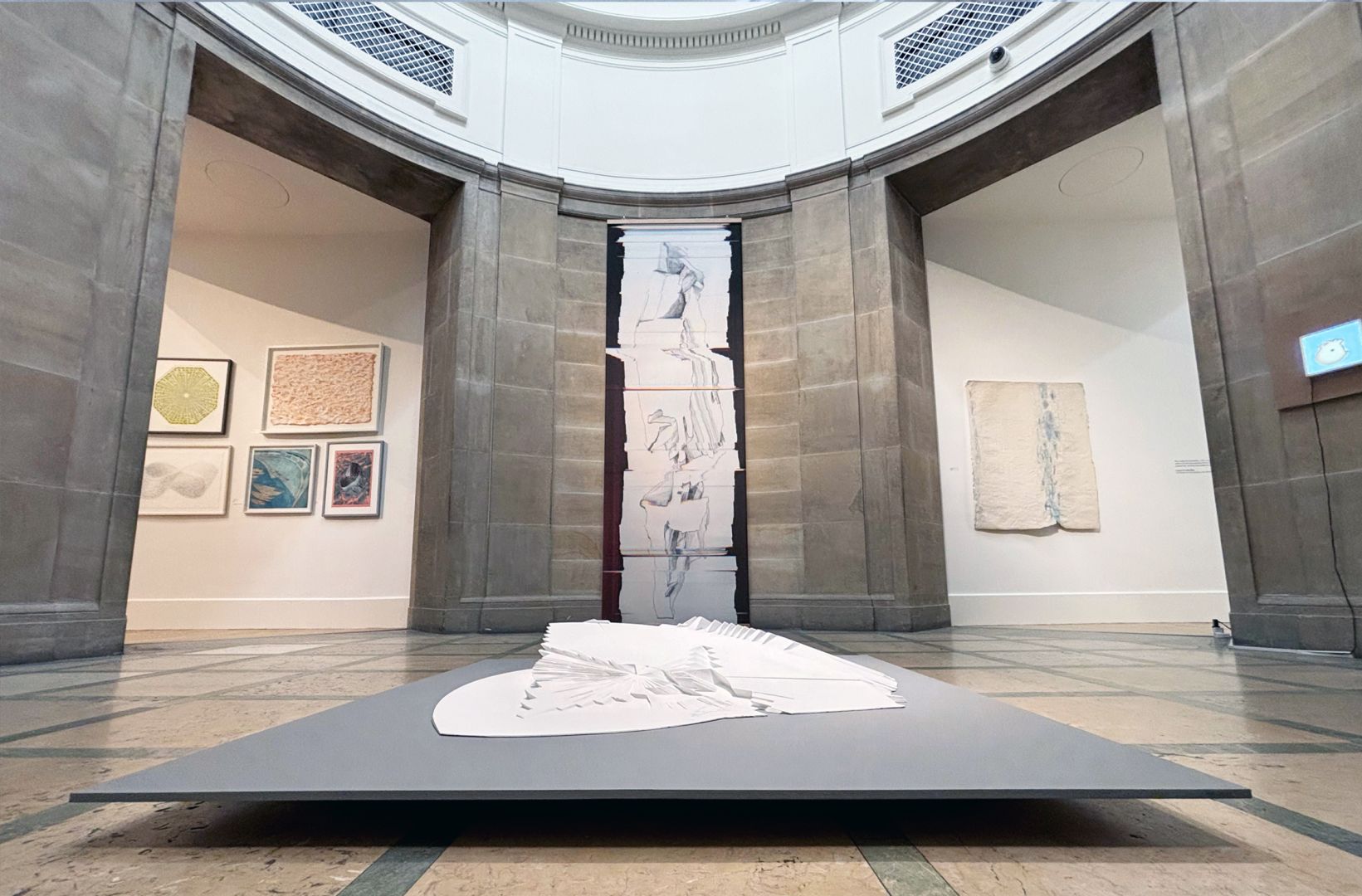
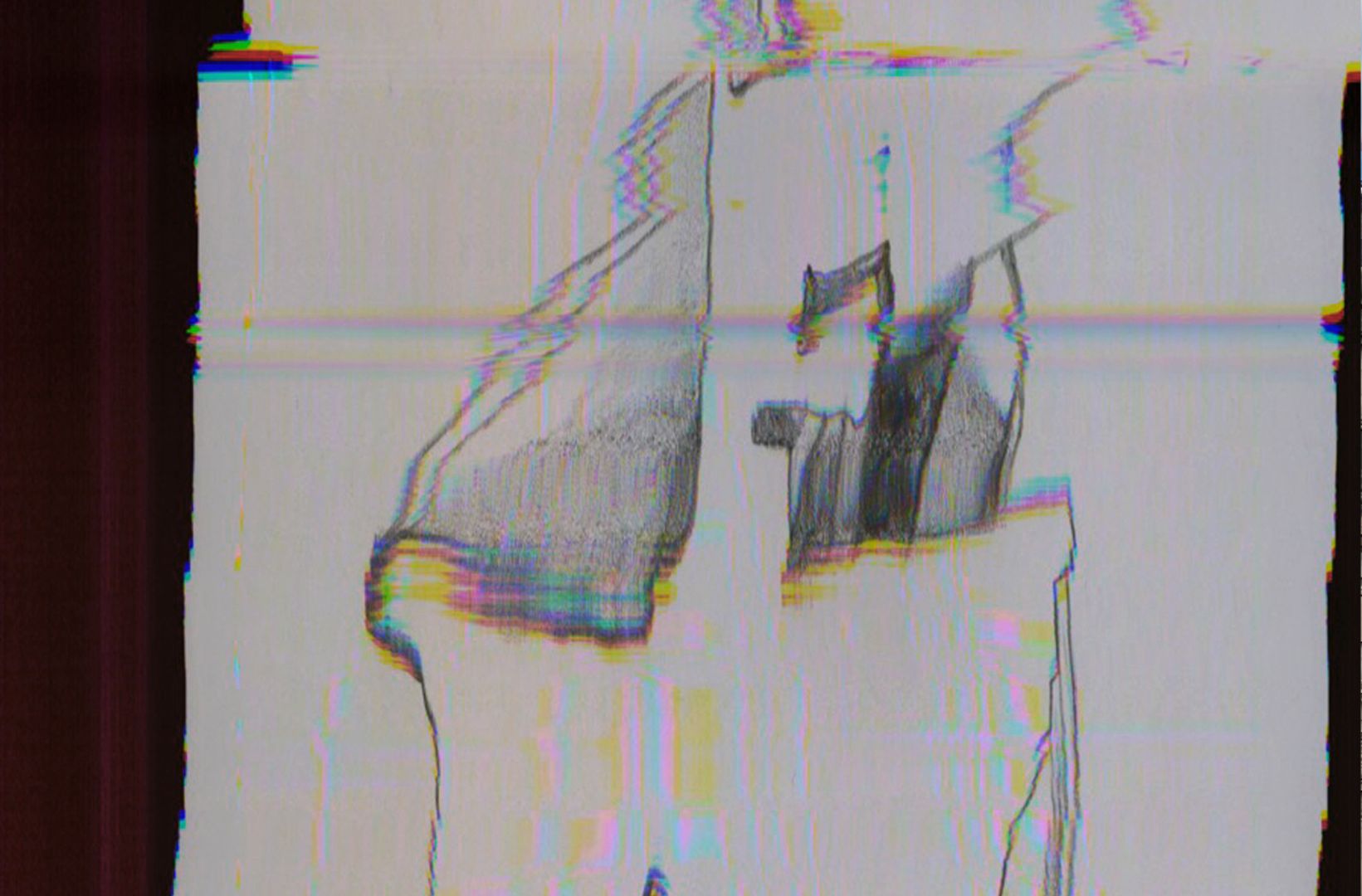
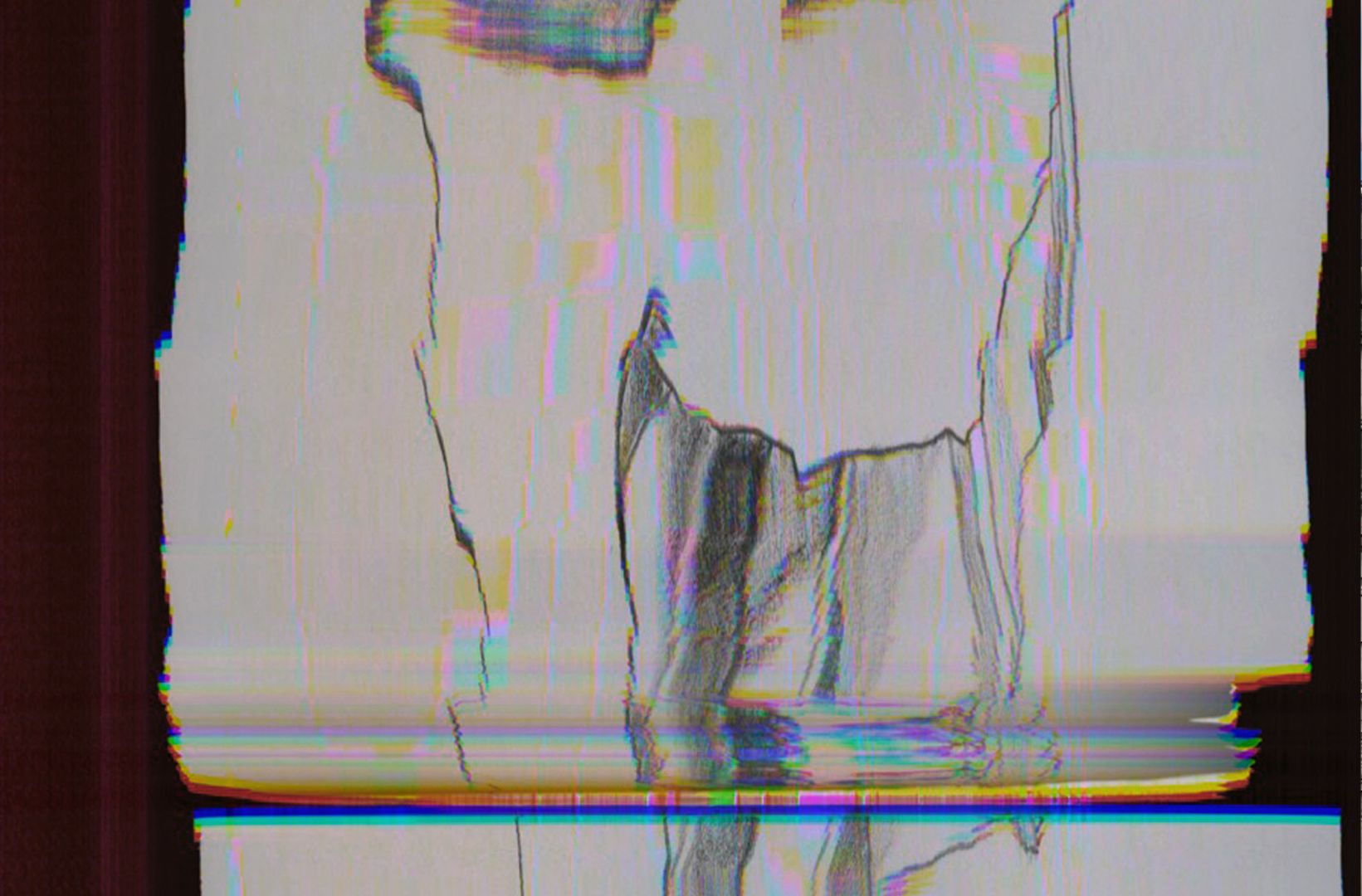
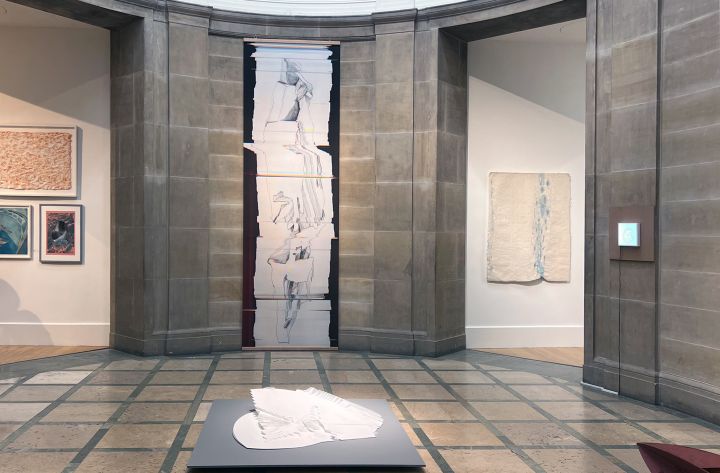
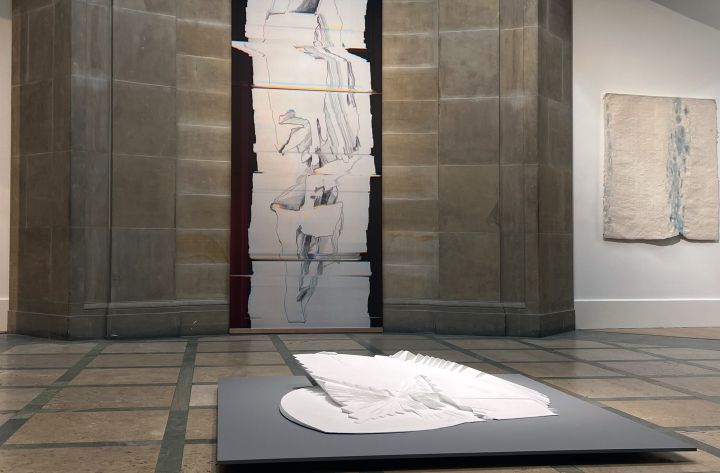
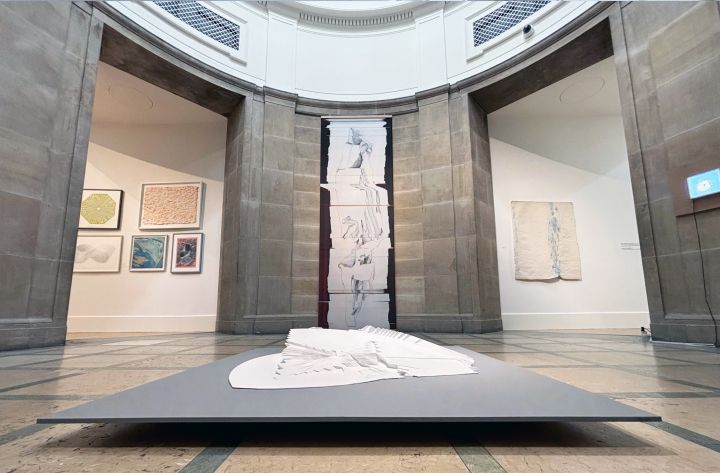
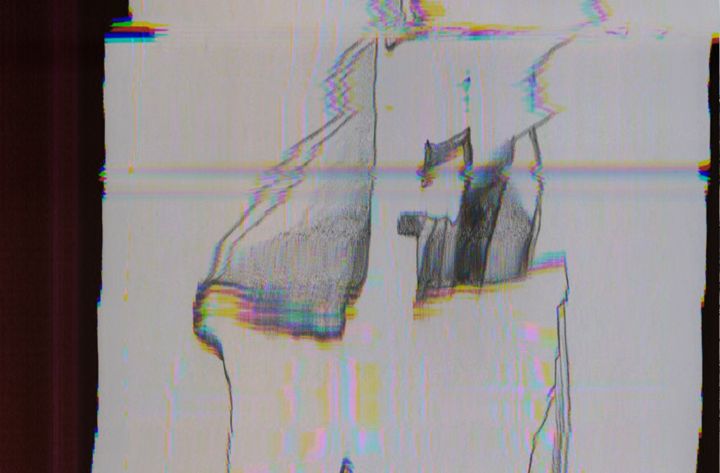
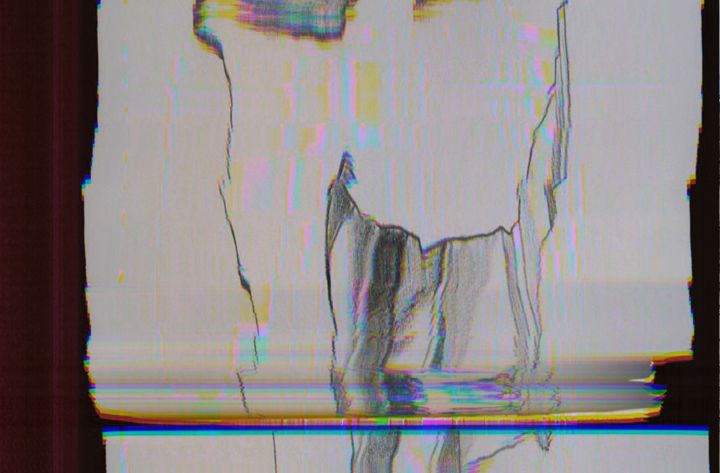
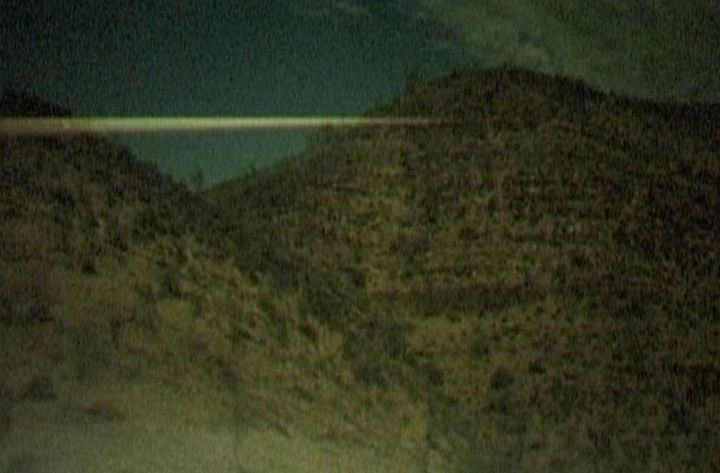
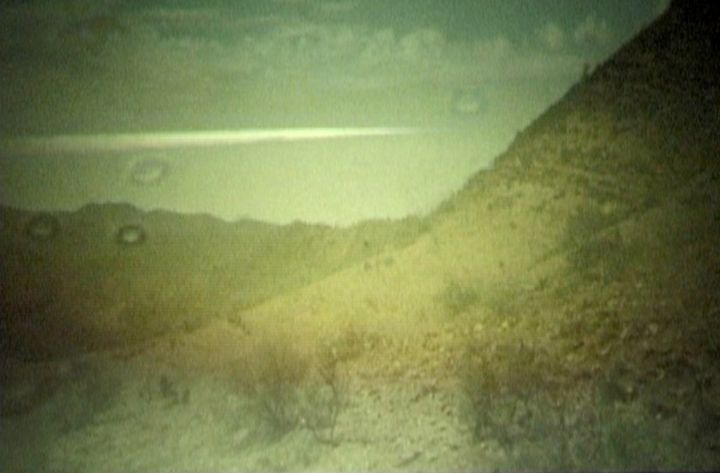
Seismogram, 2017, drawing scan as photographic print on Hahnemuhle paper, 400 x 130cm
Experimental work on paper, based the geological strata and the sculpting of landscape through time, in one of the oldest deserts in the world Flinders Ranges SA. Seismogram was made in-situ using a solar-powered handheld scanner (a reconfigured flatbed scanner) its rendering of the landscape characterised by glitches in the data feed, the erratic movements of the hand, atmosphere, temperature, dust and prismatic refractions of light.
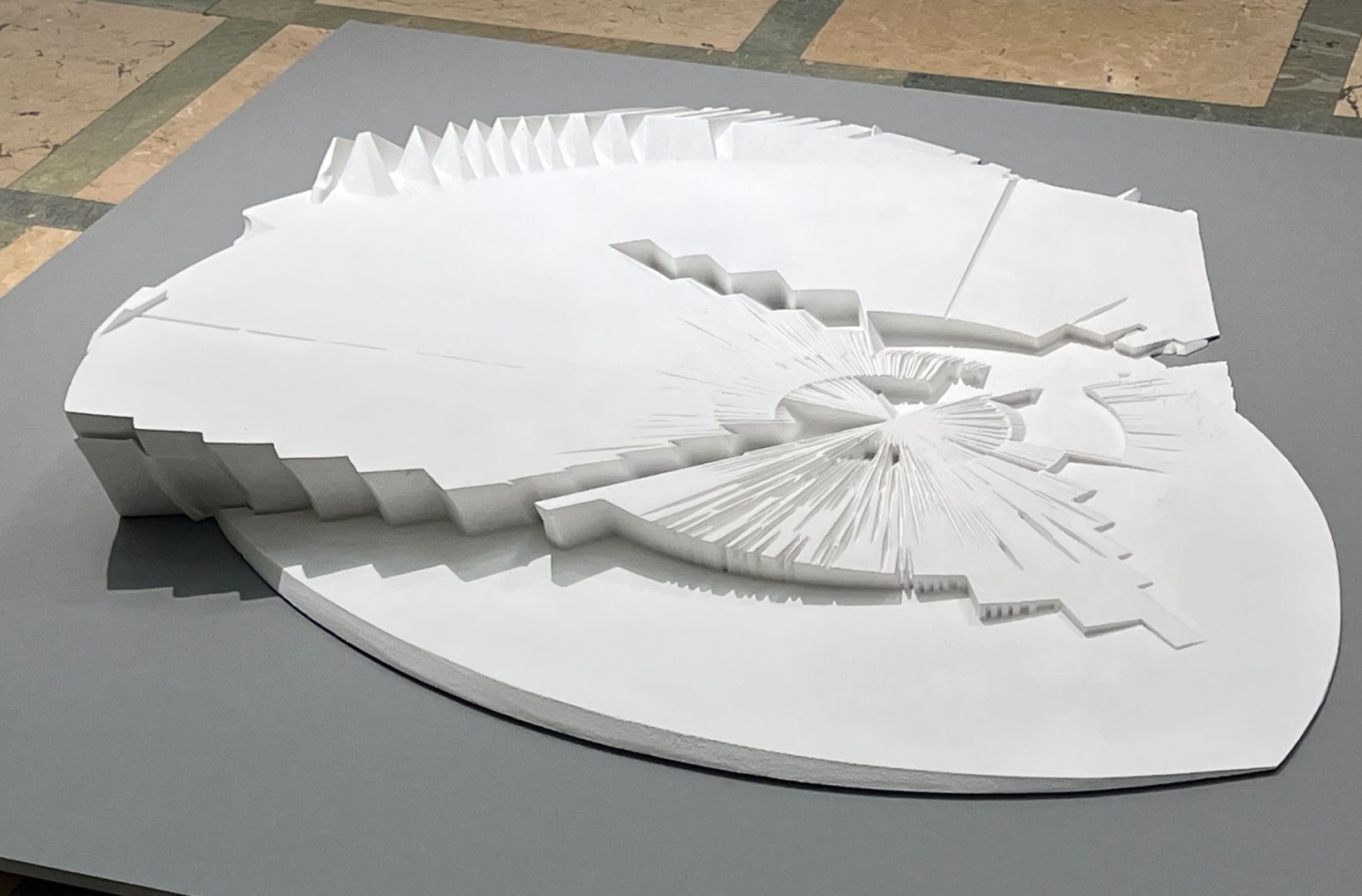
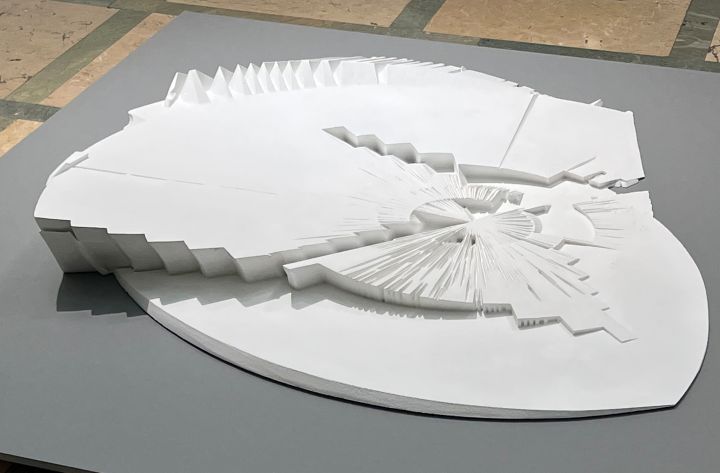
EON III, 2022, bronze with white patina, 130 x 110 x 20cm
EON Project explores the perception of time, connecting the primordial with the technological, from evidence of the earliest forms of multi-cellular life to the proliferation of satellite mega-constellations orbiting the earth. The crystalline structures of the satellite sculptures evoke the fracturing of linear time, warping and transitioning as evolving interfaces of relayed information. An Eon spans approximately one billion years, the duration of the formation of the Flinders Ranges SA where the research of EON Project took place, where satellite dishes punctuate the outback landscape amplifying the increasing mesh of technology. The transition from formless unicellular life to multicellular life was momentous and is the basis of co-ordinated cellular structures that form the diversity of life today and the hyper-connectivity of the contemporary world.
(Supported by Kevin Taylor Legacy Grant TCL Landscape Architects)
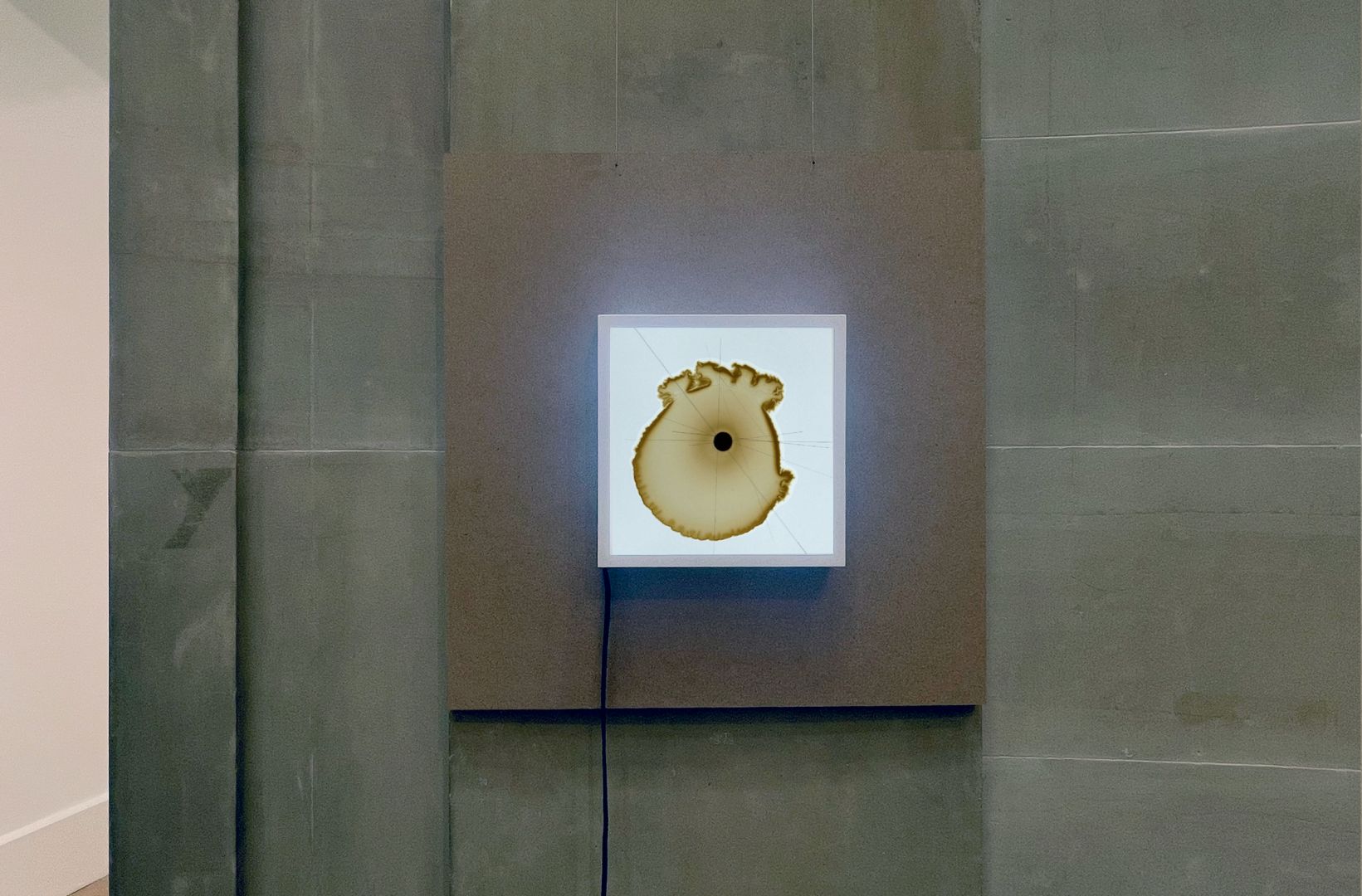
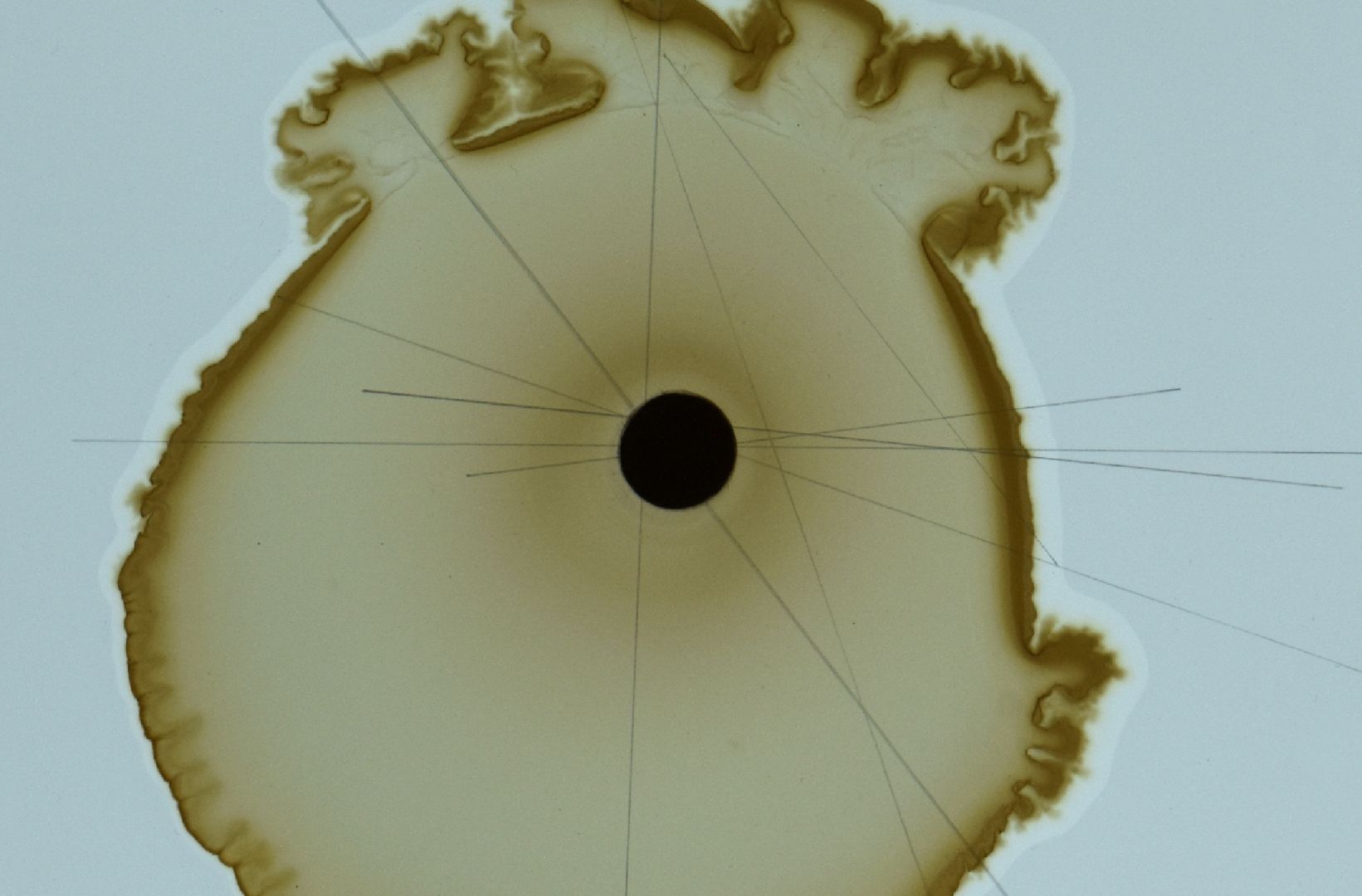
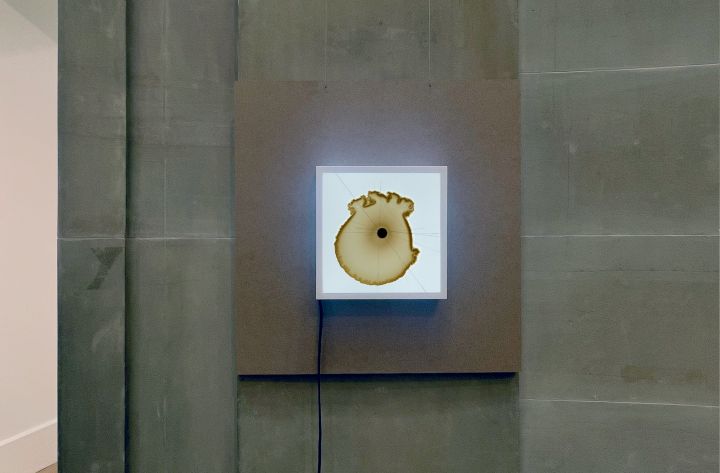
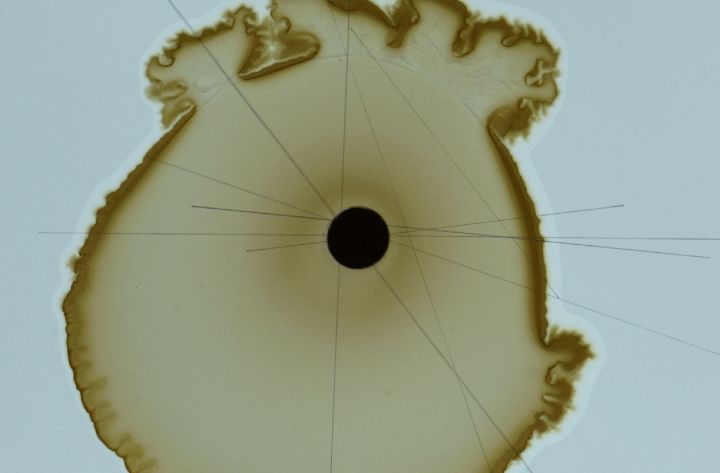
Prebiotica, 2019, light box, durational experiment with Prebiotic material on silica-gel glass plate with carbon marks, 20 x 20 x 4cm
Prebiotica moves from the astrophysical to the primordial. Combining field works and laboratory works, from the site of the Murchison Meteorite, identified as one of the most primitive and profound astronomical bodies to contact earth, comprising complex organic compounds, which is speculated that could ultimately forge the building blocks of life. The carbon drawn lines on the silica gel plate reference possible trajectories from these outer rimmed meteorites that could have intersected with earth when it was primed to support the emergence of life.
(Supported by ANAT Synapse residency at CSIRO)
IN TIME marks this significant year for the RSA, the tricentenary of the birth of James Hutton (1726–1797), the ‘father of modern geology’. Reflecting on our philosophical and physical foundations (with the building constructed on ancient volcanic rock), Cattrell’s curation explores the RSA’s rich and layered development over time. She has invited artists interested in ideas of geology and the passage of time, including Martin Creed, James Geurts, Cathie Pilkington and Stephen Skrynka, to take part in the bicentennial exhibition.